




Tom Cruise has one of the most recognizable smiles in film, and the detail viewers notice most is a single upper front tooth that sits off the center of his smile. The question comes up constantly: why does one central incisor line up with the middle of the face on some people and not on others, and why are Tom Cruise’s teeth off center at all. This article answers that with dentistry rather than speculation. It explains what the dental midline is, why a front tooth drifts off center, why deviations under 2 mm (0.08 inches) usually go unnoticed, and how modern cosmetic dentistry, including Digital Smile Design and porcelain veneers, plans the midline before any treatment begins. It makes no diagnosis of any individual and assigns no treatment to Tom Cruise, because his dental records are private.
The information in this article is for educational purposes only and does not constitute medical advice. Consult a qualified dental professional before making any treatment decisions.
Why Do Tom Cruise’s Teeth Look Off Center?
Tom Cruise’s teeth look off center because his upper dental midline, the line between his two front teeth, does not align with the vertical midline of his face. This is the feature that millions of viewers notice in close-up film frames and red-carpet photos, and it is one of the most common smile characteristics in the general population rather than a rare flaw. A dental midline that sits to one side of the facial midline is called a midline deviation or midline shift, and it is a measurable position, not a defect.
Public photographs of the actor across four decades, from his early role in the 1983 film The Outsiders to recent Mission: Impossible press appearances, show a consistent off-center upper midline alongside brighter, more even teeth over time. What those photos cannot confirm is any specific procedure, so this article treats the visible midline strictly as an illustration of a dental concept. The concept worth understanding is what the dental midline actually is and why it matters more to viewers than most people realize.
What Is the Dental Midline and Why Does It Matter?
The dental midline is the imaginary vertical line that passes between the two upper central incisors, ideally aligning with the center of the face and the center of the lips. Dentists assess it against 2 reference lines: the facial midline running down the center of the face, and the lip philtrum above the upper lip. A smile reads as balanced when the dental midline coincides with these facial landmarks, which is why the midline is one of the first things a cosmetic dentist records when planning any front-tooth work. In Tom Cruise’s smile, this is the line that sits slightly to one side of his facial midline.
The image below compares the upper dental midline with the facial midline, with the small horizontal gap between the two lines marking the deviation.

Midline position matters because the human eye is drawn to symmetry in the central part of a smile. People weighing cosmetic dentistry for a front-tooth concern often assume any deviation needs correcting, but perception research shows the threshold is higher than expected. Laypeople detect a midline shift as unattractive only once it exceeds roughly 2 mm (0.08 inches), while smaller shifts usually pass unnoticed, according to a study published in the American Journal of Orthodontics and Dentofacial Orthopedics (Pinho et al., 2007). Dental professionals notice smaller deviations than laypeople do, as a landmark comparison in the Journal of Esthetic and Restorative Dentistry first established (Kokich et al., 1999). Knowing where a tooth sits is only half the answer, so the next question is why it moved there at all.
Why Does a Front Tooth Drift Off Center?
A front tooth drifts off center for 4 main reasons, and most of them have nothing to do with how the teeth first grew in. The 4 common causes of an off-center upper tooth are early loss of a nearby baby or adult tooth that let neighbors drift into the gap, crowding that pushes a central incisor sideways, a congenitally missing or undersized lateral incisor that unbalances the arch, and a natural asymmetry between the dental midline and the facial midline present from development.
These causes explain why an off-center tooth is so common and why it often appears in people with otherwise healthy teeth, as Tom Cruise’s long-visible midline illustrates. There are 4 typical drivers of midline deviation, compared below:
| Cause | What happens | Typical onset |
|---|---|---|
| Early tooth loss | Adjacent teeth drift into the empty space | Childhood or adolescence |
| Dental crowding | Insufficient arch space rotates or shifts a central incisor | Adolescence |
| Missing or small lateral incisor | The arch loses symmetry around the center | Developmental |
| Facial-dental midline mismatch | The two midlines never coincided to begin with | Developmental |
Because the cause determines the fix, the amount a tooth is off center matters far less than the reason behind it. That diagnostic logic is exactly where the internet’s shortcut, assuming every celebrity smile is veneers, falls apart.
Does an Off-Center Tooth Mean You Need Veneers?
No, an off-center tooth does not automatically mean veneers are the answer. The internet tends to collapse every celebrity smile change into one explanation, usually veneers, but a deviated midline has several possible routes depending on its cause, and the correct one is chosen after examination, not before. Orthodontics can physically move a drifted tooth back toward center, while porcelain veneers reshape the visible surface to rebalance a smile when the underlying position is acceptable. E-max porcelain veneers last 10 to 20 years with proper care, which makes the choice between moving a tooth and resurfacing it a long-term decision rather than a quick cosmetic one.
Choosing between those paths depends on diagnosis, and the modern tool for making that choice visible to the patient is digital smile planning. That planning step is where the midline stops being guesswork.
How Does Digital Smile Design Plan the Midline?
Digital Smile Design plans the midline by mapping the dental midline against the facial midline and lip line in photographs and videos before treatment begins. At Maltepe Dental Clinic, the Digital Smile Design workflow overlays reference lines on the patient’s face, so the team can decide whether to center a tooth or leave a slight natural offset, based on what they can see rather than guesswork. The clinic’s in-house laboratory then produces the restorations with ceramicist hand-finishing against that approved plan, which keeps the final midline consistent with the preview the patient signed off on.
The before and after case below shows an upper smile with an off-center, uneven front-tooth line on the left, and a rebalanced, centered smile on the right after treatment at Maltepe Dental Clinic in Istanbul.

Can Braces Fix an Off-Center Tooth in Adults?
Yes, braces can fix an off-center tooth in adults, because teeth move at any age when steady force is applied. Adult orthodontic treatment moves a drifted central incisor back toward the facial midline using fixed braces or clear aligners, though bone remodeling is slower in adults than in adolescents, so treatment times run longer. Orthodontics addresses the tooth’s actual position, which veneers alone cannot change.
Is a Slightly Off-Center Smile a Problem?
No, a slightly off-center smile is not a problem in most cases. A midline deviation under 2 mm (0.08 inches) is generally imperceptible to laypeople and sits within the normal range of natural smiles (Pinho et al., 2007). Many dentists deliberately leave a small, natural midline offset rather than forcing perfect symmetry, because a flawlessly centered smile can read as artificial. Treatment is elective and driven by patient preference, not by a health requirement.
Does Teeth Whitening Change Tooth Position?
No, teeth whitening does not change tooth position. Whitening alters only the shade of the enamel, so teeth whitening brightens an off-center tooth without moving it. A brighter, more uniform smile can make existing alignment more noticeable, which is why whitening and alignment are planned as separate decisions rather than treated as one.
Why Do Teeth Look Brighter and Straighter Over Time in Photos?
Teeth look brighter and straighter over time in photos because cosmetic dental work and professional whitening produce changes that natural aging does not. Adult teeth darken and wear gradually rather than brightening on their own, so a visible shift toward whiter, more even teeth in later photographs reflects dental treatment of some kind. Identifying which treatment from photographs alone is not possible, which is why responsible analysis stops at describing the change rather than naming the procedure.
Sources
Clinical sources (verified 2026-10-20):
Kokich, V.O. Jr., Kiyak, H.A., & Shapiro, P.A. (1999). Comparing the perception of dentists and lay people to altered dental esthetics. Journal of Esthetic and Restorative Dentistry, 11(6), 311–324. https://doi.org/10.1111/j.1708-8240.1999.tb00414.x
Pinho, S., Ciriaco, C., Faber, J., & Lenza, M.A. (2007). Impact of dental asymmetries on the perception of smile esthetics. American Journal of Orthodontics and Dentofacial Orthopedics, 132(6), 748–753. https://doi.org/10.1016/j.ajodo.2006.01.039

Discover the innovative features and clinical benefits of MegaGen AnyRidge® Implants. Learn why this advanced Read more

What are "Turkey Teeth"? Discover the truth behind the viral trend, understand the difference between Read more
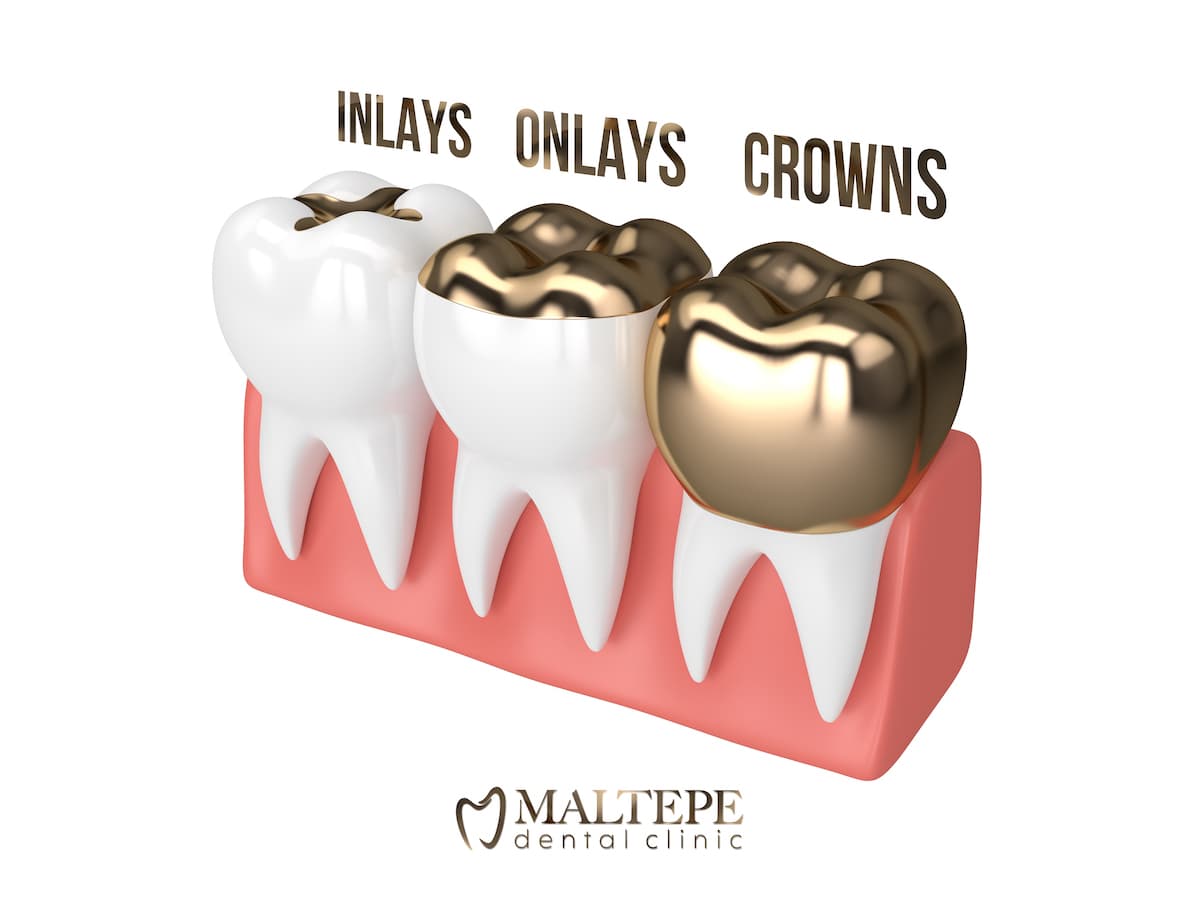
Inlay vs onlay vs crown compared: how much tooth each removes, how long they last, Read more

Discover the benefits of affordable, high-quality dental implants in Turkey. Learn about costs, procedures, finding Read more

Porcelain (E-max) inlays and onlays explained: cost in Turkey, the UK, the US and Germany, Read more

White spots on teeth come from early decay, fluorosis, braces, or enamel defects. See what Read more