
Receding Gums: Symptoms, Causes, Stages and Treatment Options

Gum recession (also called gingival recession) is a condition in which the gum tissue gradually pulls away from the teeth, exposing parts of the root that are normally hidden beneath the gum line. Because root surfaces lack the protective enamel that covers the crown of a tooth, exposed roots are far more vulnerable to sensitivity, decay, and further damage.

The condition is remarkably common. A systematic review and meta-analysis published in Oral Diseases estimated the global prevalence of gingival recession at approximately 78% of the adult population when measured at minimal thresholds, rising to roughly 85% when a cut-off of 1 mm or more is applied (Yadav et al., 2023). A more recent meta-analysis published in the Journal of Dentistry confirmed a similar figure, reporting an overall prevalence of 81.1 % for recession of 1 mm or greater (In-press systematic review, Journal of Dentistry, 2025).

Despite how widespread it is, many people do not realise their gums are receding until noticeable symptoms appear. Early detection makes a significant difference to treatment outcomes, so understanding what to look for is the first step toward protecting your oral health.

The information in this article is for educational purposes only and does not constitute medical advice. Consult a qualified dental professional before making any treatment decisions.

What Does Gum Receding Mean?

Gum recession occurs when the margin of gum tissue (gingiva) that surrounds the teeth wears away or migrates toward the root, creating a gap, known as a “pocket”, between the tooth and the gum line. These pockets make it easier for bacteria to accumulate. If left untreated, the supporting bone and connective tissue can deteriorate, potentially leading to tooth loosening or even tooth loss.
Periodontal surgery encompasses a range of procedures designed to halt or reverse this process, depending on how far the recession has progressed.

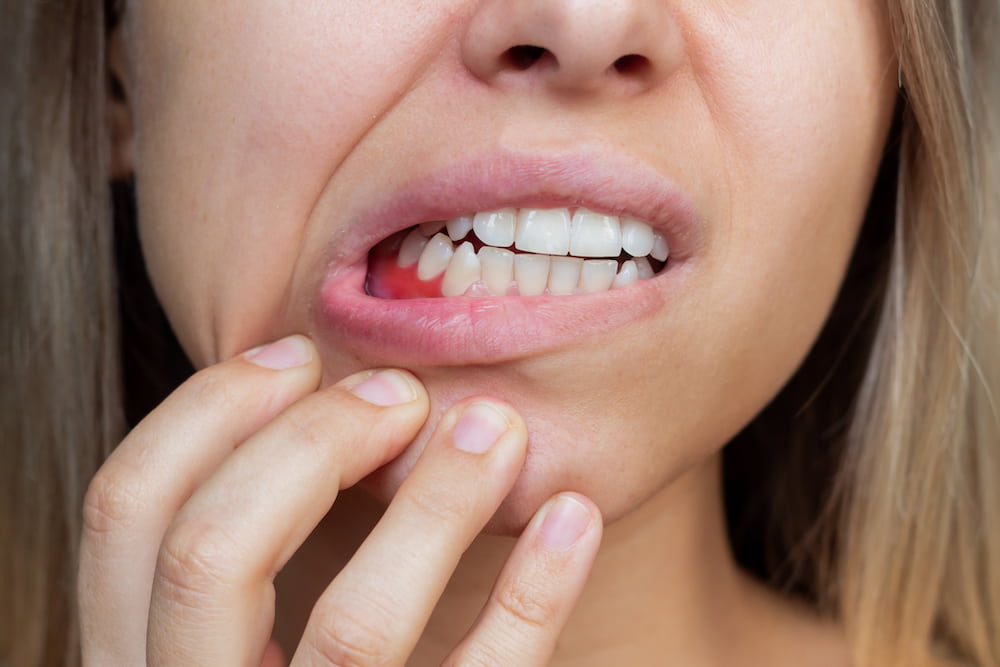
What Do Receding Gums Look Like?

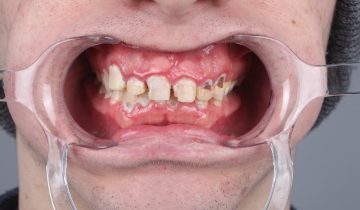
In the early stages, gum recession can be difficult to spot because the changes happen gradually. As the condition progresses, however, several visual signs become apparent:

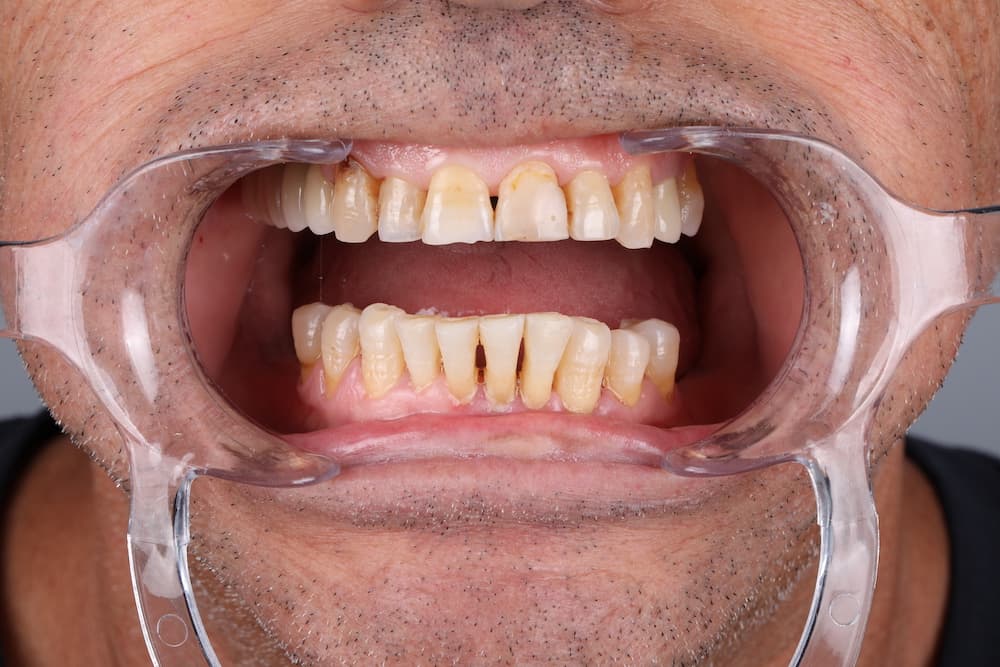
  • Longer-looking teeth: The most recognisable sign. As the gum line creeps upward (on the upper jaw) or downward (on the lower jaw), more of the tooth surface becomes visible, making the teeth appear elongated.
  • A visible notch at the gum line: You may notice a small step or ledge where the enamel of the crown meets the exposed root surface. This area often has a slightly different colour, as root surfaces tend to be darker or more yellowish than enamel.
  • Gaps or “black triangles” between teeth: When the gum tissue between two teeth (the interdental papilla) recedes, small dark spaces appear near the gum line.
  • Exposed root surfaces: In moderate to advanced cases, the root surface itself becomes visible. Roots are smoother and softer than enamel and may appear darker.

If you are unsure whether your gums are receding, examining your teeth in a mirror under good lighting can sometimes reveal early changes. However, a professional examination with a periodontal probe remains the most reliable way to detect recession before it becomes visually obvious.

What Are the Symptoms Of Receding Gums? 

Gum recession often develops without pain in the early stages, which is why regular dental check-ups are so important. As the condition advances, patients typically notice one or more of the following:

  • Tooth sensitivity: Discomfort or a sharp sensation when consuming hot, cold, sweet, or acidic food and drink. This occurs because the exposed root surface contains thousands of microscopic tubules that lead directly to the tooth’s nerve.
  • Red, swollen, or tender gums: Inflammation around the receding gum line is a frequent companion, particularly when gum disease is the underlying cause.
  • Bleeding when brushing or flossing: Even gentle brushing may trigger bleeding in areas where the gum tissue has become inflamed or weakened.
  • Sore or painful gums: Localised pain along the gum margin, especially during brushing or eating.
  • Loose teeth: In advanced cases, the loss of supporting bone and tissue can cause teeth to feel mobile.
  • Bad breath (halitosis): Bacterial build-up in deep periodontal pockets often produces a persistent, unpleasant odor.

What Causes Gums to Recede?

Gum recession is rarely caused by a single factor. Research identifies a combination of pathological, anatomical, and behavioral influences:

  • Periodontal (gum) disease is the primary cause. Bacterial infection triggers an inflammatory response that gradually destroys gum tissue and the underlying bone. The early stage, gingivitis, is reversible, but once it progresses to periodontitis, the tissue damage becomes permanent without professional intervention.
  • Aggressive or incorrect brushing is one of the most common non-disease causes, particularly when a hard-bristled toothbrush is used with excessive pressure. The mechanical trauma wears away the delicate gum margin over time.
  • Genetic predisposition plays a significant role. Studies suggest that approximately 30 % of the population may be predisposed to periodontal disease regardless of how well they maintain their oral hygiene.
  • Tobacco use is strongly associated with gum recession. A systematic review and meta-analysis confirmed that smoking significantly increases the odds of developing gingival recession (In-press meta-analysis, Journal of Dentistry, 2025).
  • Hormonal changes, particularly during puberty, pregnancy, and menopause, can make gum tissue more sensitive and susceptible to recession.
  • Teeth grinding or clenching (bruxism) places excessive lateral forces on the teeth, which can accelerate bone loss and gum recession over time.
  • Thin gingival phenotype (biotype) is an anatomical risk factor. Individuals with naturally thin gum tissue are more susceptible to mechanical and inflammatory recession than those with a thick, robust gingival phenotype.
  • Misaligned teeth or a traumatic bite can create uneven force distribution, concentrating stress on specific teeth and accelerating localized recession.
  • Orthodontic treatment, if not carefully planned, can move teeth toward areas of thin bone, potentially triggering recession. This is particularly relevant for lower front teeth.

At What Age Do Gums Start Receding?

Gum recession is not exclusively a condition of older adults. While it becomes more visually apparent after the age of 40, the underlying process often begins much earlier. Mild recession can develop during the late teens and twenties, especially in individuals who brush too aggressively, have a thin gingival phenotype, or have undergone orthodontic treatment.

The key point is that age itself does not cause recession; rather, the cumulative effect of risk factors (brushing trauma, periodontal disease, smoking, genetics) makes recession more likely to become noticeable with time. A 25-year-old who brushes with excessive force using a hard-bristle brush may develop recession sooner than a 50-year-old with a gentle technique and healthy gums.

This is why dentists recommend periodic periodontal screenings starting in early adulthood, not just later in life.

How Is Gum Recession Classified?

Dental professionals use the Miller Classification system to describe the severity of gum recession and to predict treatment outcomes:

  • Class I: Recession that does not extend to the mucogingival junction (the boundary between the attached gum and the loose tissue below it). No bone or soft tissue loss between the teeth. This class has the best prognosis for full root coverage with grafting.
  • Class II: Recession extending to or beyond the mucogingival junction, but still without loss of bone or tissue between the teeth. Full root coverage is still achievable.
  • Class III: Recession extending to or beyond the mucogingival junction, with some loss of bone or tissue between the teeth. Only partial root coverage can be expected.
  • Class IV: Severe recession with significant bone and tissue loss between the teeth. Root coverage is generally not predictable; treatment focuses on halting further progression.

Your periodontist will assess which class applies to each affected tooth and recommend treatment accordingly.

How Can You Stop Receding Gums from Getting Worse?

While gum tissue does not regenerate on its own once it has receded, you can take meaningful steps to slow or halt further recession:

  • Switch to a soft-bristled toothbrush and use a gentle, circular brushing technique. Electric toothbrushes with pressure sensors can help prevent overbrushing.
  • Maintain thorough oral hygiene: Brush twice daily, floss once daily, and consider using an interdental brush to reach areas floss cannot.
  • Stop smoking: Tobacco use is one of the strongest modifiable risk factors for gum recession.
  • Treat bruxism: If you grind or clench your teeth, a custom night guard can reduce the lateral forces that accelerate bone and gum loss.
  • Attend regular dental check-ups: Professional cleanings remove calculus (tartar) that cannot be cleared by home care alone, and periodic probing allows your dentist to detect recession before it progresses.
  • Address misalignment: If a malocclusion or crooked tooth is contributing to uneven forces, orthodontic correction may help protect the gum tissue in the long term.

For a quick visual guide to daily gum care, watch our dentist’s tips on keeping your gums healthy:

How Are Receding Gums Treated?

Treatment depends on the severity of the recession, the underlying cause, and the patient’s overall oral health.

Non-surgical treatment

For mild cases, particularly those driven by brushing trauma or early-stage gum disease, non-surgical approaches are often sufficient:

  • Scaling and root planing (deep cleaning): The dentist or hygienist removes plaque and calculus from below the gum line and smooths the root surfaces to discourage further bacterial colonisation.
  • Antimicrobial therapy: Topical antibiotic gels, antiseptic chips placed into periodontal pockets, or antimicrobial mouth rinses may be prescribed to control infection.
  • Desensitizing agents or bonding: For exposed root surfaces causing significant sensitivity, fluoride varnishes, desensitizing agents, or composite bonding can provide relief and protection.

Surgical treatment

When recession is moderate to advanced, surgical intervention is usually necessary because gum tissue does not grow back on its own.

Gum grafting is the most established and predictable surgical approach. There are three main techniques:

  • Connective tissue graft: The periodontist harvests a small piece of connective tissue from beneath the palate (roof of the mouth) and stitches it over the exposed root. This is considered the gold standard for root coverage. Research demonstrates mean root coverage rates of approximately 97 % in the short term and 98 % at over two years for Miller Class I and II defects (Harris, 2002).
  • Free gingival graft: A small section of tissue is taken directly from the palate surface and placed at the recession site. This technique is particularly useful for increasing the width of attached gum tissue rather than covering the root.
  • Pedicle (lateral) graft: Tissue is repositioned from an adjacent area of healthy gum and rotated over the exposed root. This option is only viable when sufficient donor tissue is available adjacent to the recession site.

Periodontal flap surgery is used in cases where deep pockets have formed beneath the gum line. The gum tissue is lifted to allow thorough cleaning of the root surfaces and bone, then repositioned and sutured.

Regenerative procedures, such as the application of enamel matrix derivative (e.g., Emdogain) during grafting, may enhance outcomes. A systematic review found that combining connective tissue grafts with enamel matrix derivative resulted in a statistically significant reduction in recession depth compared with grafting alone (Gim et al., 2022).

Regardless of the surgical method, meticulous post-operative oral hygiene is essential to prevent recurrence.

Frequently Asked Questions About Receding Gums

Can gums grow back after receding?

No. Once gum tissue has receded, it does not regenerate naturally. However, surgical procedures such as gum grafting can restore coverage over exposed roots and prevent further tissue loss.

Does mouthwash help prevent receding gums?

An antimicrobial mouthwash can reduce bacterial load in the mouth and support gum health as part of a comprehensive oral hygiene routine. It is not, however, a substitute for brushing, flossing, and professional cleanings.

Can receding gums affect front teeth?

Yes. Gum recession on the front teeth is particularly common because the bone and tissue in the anterior region tend to be thinner. Front teeth are also more exposed to brushing trauma. Recession in this area is especially noticeable because the front teeth are visible when you smile.

What vitamins support gum health?

Vitamin C plays a well-documented role in collagen synthesis, which is essential for maintaining healthy gum tissue. Vitamin D supports calcium absorption and bone health, both of which are relevant to the structures that anchor teeth in the jaw.

Does salt water help with receding gums?

Rinsing with a mild salt-water solution (half a teaspoon of salt in a glass of warm water) can temporarily reduce bacterial levels and soothe inflamed gum tissue. It does not reverse recession but may provide symptomatic relief alongside professional treatment.

Take Action Before Recession Progresses

Gum recession is a gradual condition, but early intervention can prevent it from reaching a stage where surgical treatment becomes the only option. If you have noticed any of the symptoms described above, or if it has been more than six months since your last dental check-up, now is the time to seek professional advice.

Ready to discuss your gum health? Contact Maltepe Dental Clinic today for a consultation.

Sources

  1. Yadav, V.S., Gumber, B., Makker, K., Gupta, V., Tewari, N., Khanduja, P., & Yadav, R. (2023). Global prevalence of gingival recession: A systematic review and meta-analysis. Oral Diseases, 29(8), 2993–3002. https://doi.org/10.1111/odi.14289
  1. In-press systematic review (2025). Systematic review and meta-analysis on prevalence and risk factors for gingival recession. Journal of Dentistry. https://doi.org/10.1016/j.jdent.2025.105909 [PROSPERO: CRD42024516816]
  1. Harris, R.J. (2002). Root coverage with connective tissue grafts: an evaluation of short- and long-term results. Journal of Periodontology, 73(9), 1054–1059. https://doi.org/10.1902/jop.2002.73.9.1054
  1. Gim, J.H., Lee, J.Y., & Lee, J.B. (2022). Connective tissue graft with or without enamel matrix derivative for treating gingival recession defects: A systematic review and meta-analysis. International Journal of Periodontics & Restorative Dentistry, 42(1), e1–e10. PMID: 34922714.
  1. Jati, A.S., Furquim, L.Z., & Consolaro, A. (2016). Gingival recession: its causes and types, and the importance of orthodontic treatment. Dental Press Journal of Orthodontics, 21(3), 18–29. https://doi.org/10.1590/2177-6709.21.3.018-029.oin
Related Posts
Everything You Would Like To Know About Gummy Smile
Gummy Smile

A gummy smile, also called excessive gingival display, is a kind of dental problem that Read more

Tooth Discoloration: What Causes Yellow Teeth Stains?
woman-teeth-before-after-whitening

Yellow teeth can be a big problem for many people. This article explains the issues Read more

Patient Stories: Real Experiences With Dental Redos At Maltepe Dental Clinic

Are you dreaming of a beautiful smile that looks amazing and makes you feel much Read more

Sore Gums: Symptoms, Causes, and Treatments
imflamed and irritated gum

Sore gum can be a sign of more serious gum diseases. Here you can learn Read more

What is Gum Contouring? Quick Facts About Gum Contouring Surgery
Gum Contouring Before After

Gum contouring is one of the most effective solutions to the problems with gums. You Read more

Causes Of Bad Breath and How To Get Rid Of It?
woman covering her nose with hand next to a man with bad breath smell

Halitosis, or as commonly known, bad breath, is a widespread problem. It is estimated that Read more

Please fill in the form to get more information.

GDPR

WhatsApp Icon
blank
Maltepe Dental ClinicAntworten innerhalb 1 Stunde.
x
blank
Maltepe Dental ClinicRépond généralement dans lheure.
x
blank
Maltepe Dental ClinicTypically replies within 1 hour.
x
blank
Maltepe Dental ClinicОбычно отвечает в течение 1 часа.
x