

Last updated on August 23rd, 2022
Are you getting nervous with the thought of visiting a dentist? You are not alone. The dental visit has been cited among the most common causes of anxiety. Dental anxiety and dental phobia are frequently encountered problems, resulting in the avoidance of dental care. People who have dental phobia or dental anxiety feel that something terrible will happen during the treatment.
Furthermore, even just being examined by a dentist can make them feel stressed out. However, as they avoid and delay the treatment, their oral health gets worse, and requires even more radical dental treatment methods. Worse oral health, more missing or decayed teeth, and poorer periodontal condition are typical results of dental phobia. It is a known fact that there is a relationship between poor oral health and some life-threatening conditions, such as heart disease and lung infections.
You don’t need to delay and avoid your dental treatments. Today, it is possible to ease your anxieties and fears. Even dental phobia can be managed. The only thing you need to do is to find the right dental team that will take care of both your dental and emotional health. At Maltepe Dental Clinic, we are well aware of the fact that dental fear has negative impacts on people’s quality of life. When this fear is overcome, not only oral health but also the overall well-being of our patients is improved. So, we see it as a duty to provide excellent dental care to our patients suffering from dental fear. Our experienced and qualified dentists evaluate each case thoroughly and offer the best procedures to our patients. That is why we have so many dental phobic patients from all over the world.
One of the typical procedure is the sedation technique. At first, anaesthesiologist makes you feel calm with the sedation injections. Only after the sedation is effective, our experienced dentist starts the dental treatment procedure.
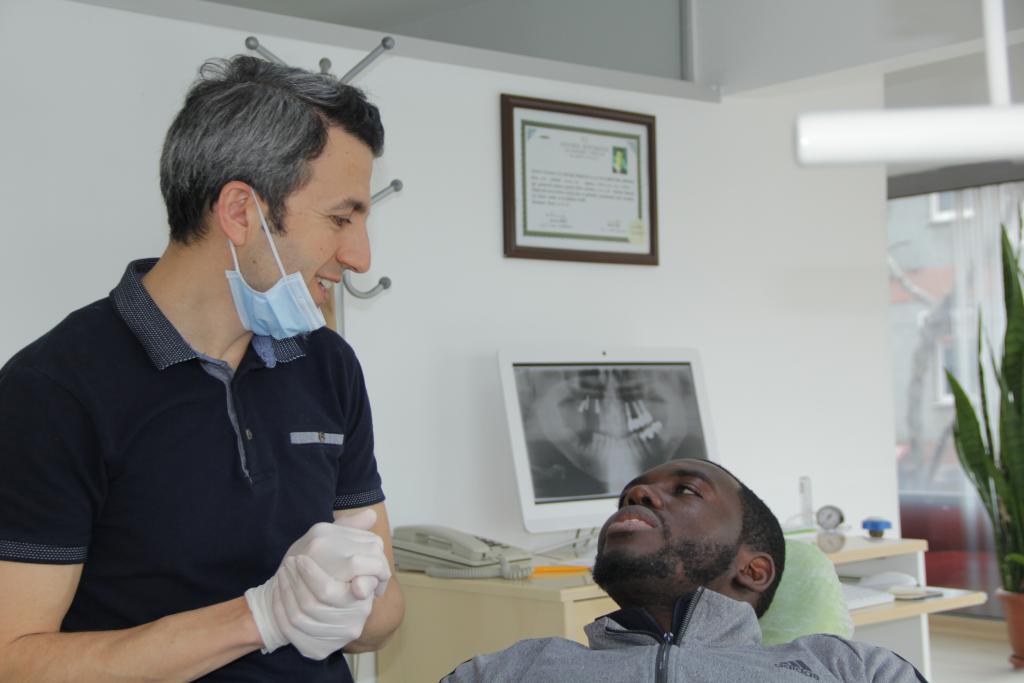
What is Dental Anxiety and Dental Phobia?
If you have dental anxiety or dental phobia, it is crucial to understand what it is and how to overcome it.
Although the words “anxiety” and “phobia” are sometimes used interchangeably, they have different meanings. Anxiety, fear and phobias are closely related concepts that may lead to one another. Anxiety is an emotional condition that precedes the actual encounter with threatening stimuli. Stress associated with the thought of visiting a dentist is referred to as dental anxiety. People with dental anxiety have a sense of uneasiness when they need to visit a dentist. Dental anxiety is a widespread problem that can be seen at different severity. It can be mild, moderate or extreme.
Phobia is an advanced form of anxiety that cannot be controlled voluntarily. It is a persistent and unrealistic fear of perceived danger, and it may cause overreactions to the threatening stimulus. Dental phobia is also known as dentophobia, dentist phobia, or odontophobia. People with dental phobia (also known as dentophobia, dentist phobia, or odontophobia) feel terrified and frightened with the thought of a dental visit. Both dental anxiety and dental phobia cause physical, cognitive, emotional, and behavioural reactions.
What Causes Dental Anxiety and Phobia?
Many different reasons may cause dental phobia and dental anxiety. Below are some of the common causes:
- Fear of pain:It can be regarded as the main reason for dental anxiety and dental phobia. This fear may also include fear of injections. Some people are terrified of needles. Especially the thought of having injections inside the mouth makes them very uncomfortable.
- Negative experiences:One of the leading causes of dental fear is negative experiences in the past. People who had discomfort during previous dental treatments are more likely to develop dental anxiety or dental phobia. Discomfort can be caused from not only painful procedures, but also complications from procedures, a bad interaction with the dentists or uncaring attitudes of the dentist.
- Indirect experiences:People can become anxious or phobic due to receiving negative information vicariously. Hearing about someone else’s negative experience may create anxiety or phobia.
- Feelings of helplessness and loss of control:Many people develop anxiety or phobia regarding situations in which they have no control. Sitting on a dental chair and keeping the mouth wide open is regarded among this type of cases by many people.
- Embarrassment:People may feel embarrassed or ashamed about the appearance of their teeth or possible mouth odours.
- Loss of personal space:Dental treatments require physical closeness. Many people feel uncomfortable about this closeness and develop dental anxieties.
Dental Anxiety and Dental Phobia Can Be Overcome
Dental phobia and dental anxiety are solvable problems. First of all, thanks to many advances in dentistry, today most of the dental procedures are pain-free. Direct or indirect negative dentist experiences mostly belong to previous periods. Recent advances enable us to provide much more gentle dentistry to our patients.
Moreover, at Maltepe Dental Clinic, we offer every possible factor to our patients to make them comfortable with dental treatment. Thanks to our experienced and expert dentists, we offer customized therapy to our patients considering their degree of anxiety and other personal characteristics.
We always establish good dentist-patient relationships with our patients. We know that a good dentist-patient relationship is very crucial for the management of phobia and anxiety. Only the experienced and qualified dentists who are aware of the needs of these patients can establish such a relationship. At our clinic, we discuss your fears with you to fully understand their source. We take your anxieties seriously and determine the best methods accordingly.
All successful treatments rest on active patient-dentist cooperation. If the source of the anxiety is lack of control, we encourage our patients to actively participate in the discussion about their treatment. If this is the triggering cause for your anxiety, we thoroughly explain every stage of the procedure.
The atmosphere of the dental office is also significant in terms of easing dental fear. With friendly, sympathetic and caring personnel, we provide our patients with a family-like atmosphere to make them comfortable at our clinic in Istanbul.
On the other hand, extremely anxious or phobic patients may also require pharmacological interventions. Our dentists and dental team are sufficiently trained, experienced and equipped with proper infrastructure to make these interventions. So, when needed, we manage the dental phobia pharmacologically by using sedation techniques.
Please contact us if you have further questions or concerns about your dental fears.
Related posts:
 5 Reasons of Dental Fear And Best Ways To Overcome Them
 Everything You’ve Ever Wanted to Know About Hollywood Smile
 Dental bridge: Definition, Types, Who Needs It, Cost, Treatment, and More
 Top 7 Dental Veneer Brands
 Partial Dentures: Everything You Need To Know
 Denture Adhesives: A Comprehensive Guide